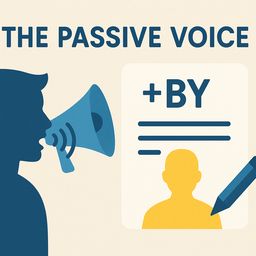
Take a look at these examples to understand how the passive voice is formed:
We use the passive voice when we want to shift the focus of the sentence.
The passive is commonly used:
The passive is created by using the verb "to be" + the past participle. The sentence begins with the object of the active sentence.
It's not always necessary to mention who or what performed the action.
Only the form of "to be" changes to reflect the tense. The past participle remains unchanged. Below are examples of the passive voice in some of the most frequently used tenses:
| Tense | Example | Structure |
|---|---|---|
| Present simple | Emails are sent every morning. | is/are + past participle |
| Present continuous | A new road is being built near the school. | is/are being + past participle |
| Past simple | The phone was stolen during the meeting. | was/were + past participle |
| Past continuous | The decorations were being removed when we arrived. | was/were being + past participle |
| Present perfect | The documents have been signed by the manager. | has/have been + past participle |
| Past perfect | She realized her keys had been taken. | had been + past participle |
| Future simple | The report will be submitted tomorrow. | will be + past participle |